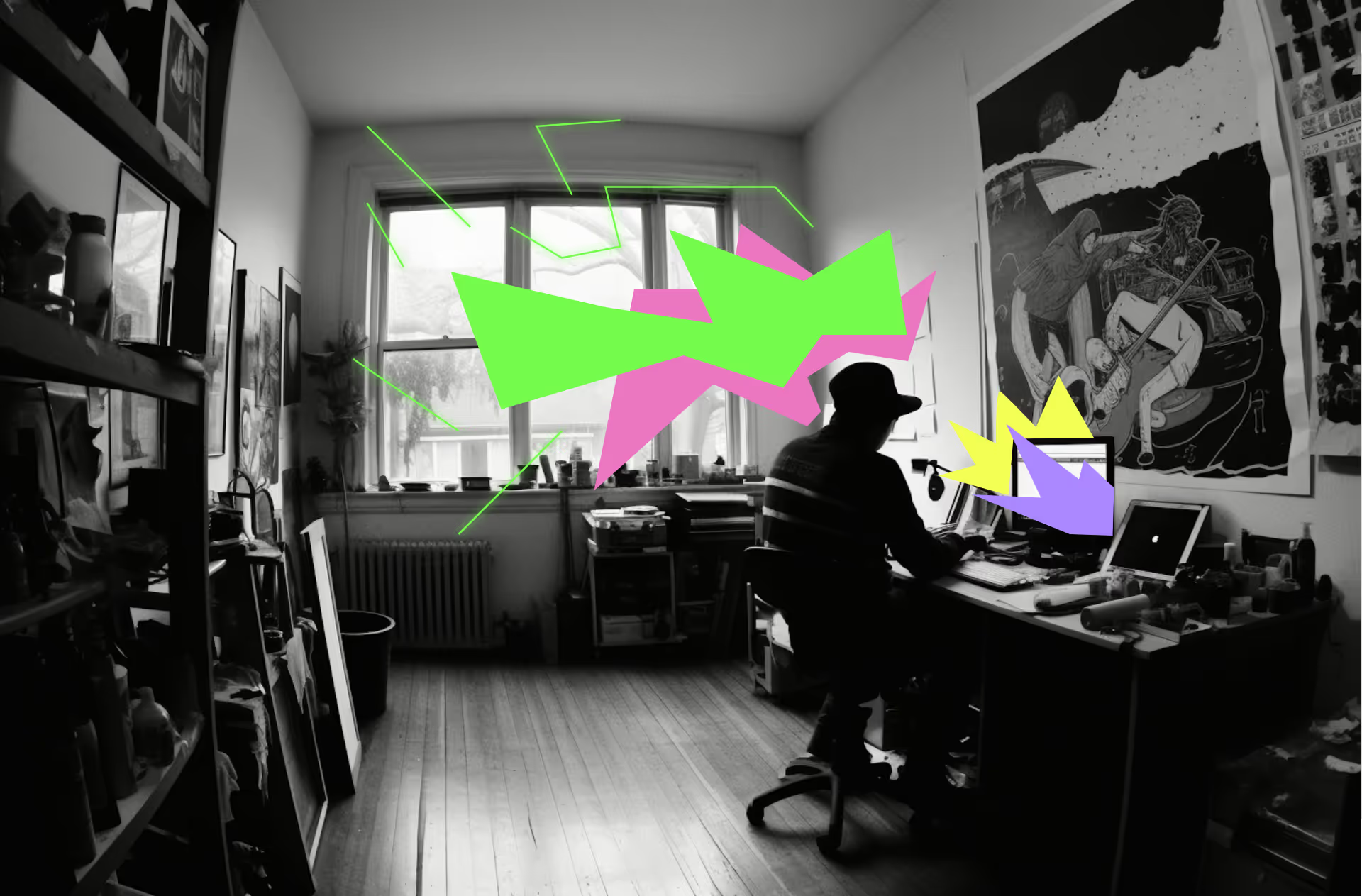
The Bold Edit
Editing is where a project becomes watchable—and where a lot of the craft lives. “The Bold Edit” is about the decisions I make in post-production: what to cut, what to keep, what to emphasize, and how to shape sound so the final piece feels intentional.
In my editing-focused YouTube project, I approached the timeline like a structure problem. First: assemble the story in the simplest form—clean sequence, clear beginning/middle/end, and no distractions. Second: tighten pacing by removing repetition and choosing the strongest takes. Third: polish transitions so cuts feel motivated, not random. When the edit is working, the viewer doesn’t notice the technique; they just follow the story.
Audio is a major part of that polish. Editing “with audio in mind” means listening for consistency: level balance, sudden jumps, distracting background noise, and moments where the sound can carry continuity between shots. Even when visuals are strong, inconsistent audio breaks immersion quickly. My goal is to keep sound supporting the content—present, clean, and stable.
Color and exposure adjustments are also part of professionalizing an edit. Small corrections help continuity between shots, especially if clips were captured under different lighting conditions. I keep corrections subtle because the goal is not to “filter” the video; it’s to make the viewing experience smooth.
This post also connects back to my videography work: pre-production and shooting decisions make editing easier. My Location Tour Exercise represents that capture-first mindset: plan coverage, capture stable footage, and pay attention to environment, so the edit has options. When capture and edit support each other, the workflow feels professional end-to-end.
The outcome: an edit that communicates clearly, feels paced intentionally, and treats audio as part of storytelling—not an afterthought.
Take Action Today!
This is your chance to make a significant change in your life.