
Website Redesign
Mr. Mozzarella is a UX and interface design project focused on redesigning a pizza ordering website to improve usability, customization, and user engagement. The project combines user research, information architecture, and visual design to create a seamless and intuitive ordering experience.
This project was developed within an academic setting as part of a web design and UX course, structured to simulate a real-world client engagement. The instructor assumed the role of a client, providing project requirements, feedback, and approval throughout the design process.
The objective of this approach was to replicate industry-standard workflows, including requirement gathering, planning documentation, stakeholder communication, and iterative design validation. This ensured that the project was not only design-focused but also grounded in practical project management and professional collaboration.
Throughout the project, communication was conducted in a manner consistent with professional client relationships.
The client (instructor) was actively involved in:
Formal communication methods included:
This process ensured alignment between the project outcomes and stakeholder expectations while reinforcing professional communication practices.
A comprehensive set of planning and pre-production documents was developed to support the project lifecycle.
These included:
This documentation ensured clarity, alignment, and traceability throughout the project.
Key phases included:
Each phase included defined milestones and deliverables, with regular reviews conducted to ensure progress and quality.
Key phases included:
Each phase included defined milestones and deliverables, with regular reviews conducted to ensure progress and quality.
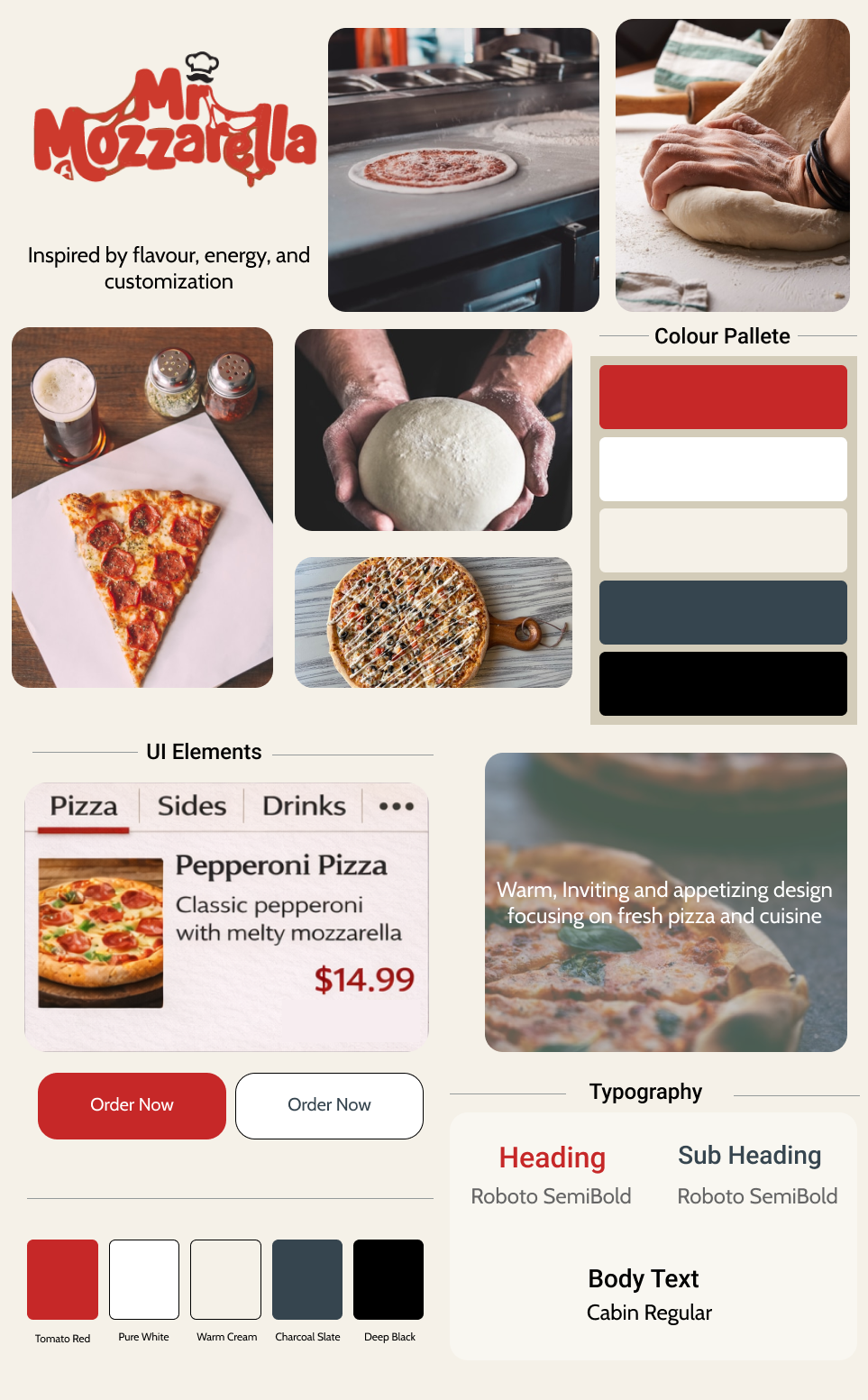
The mood board defines the visual tone, color palette, and branding direction of the project. It establishes a warm and inviting aesthetic using red, cream, and dark tones, supported by clean typography choices to reflect a modern food ordering experience.
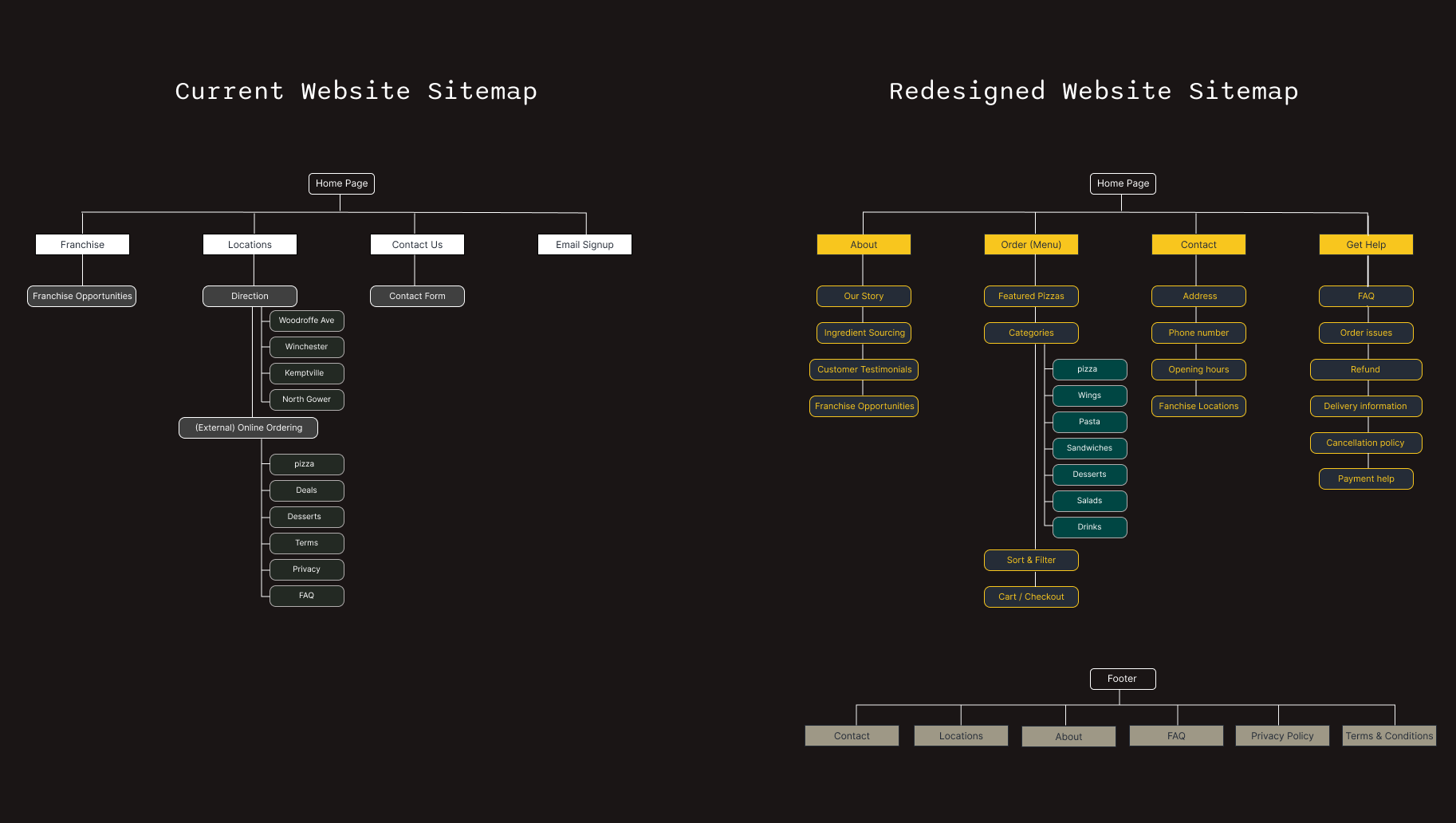
The sitemap restructures the website to improve navigation clarity and content organization. Key categories such as menu, help, and contact are clearly defined, allowing users to navigate efficiently and complete tasks with minimal confusion.
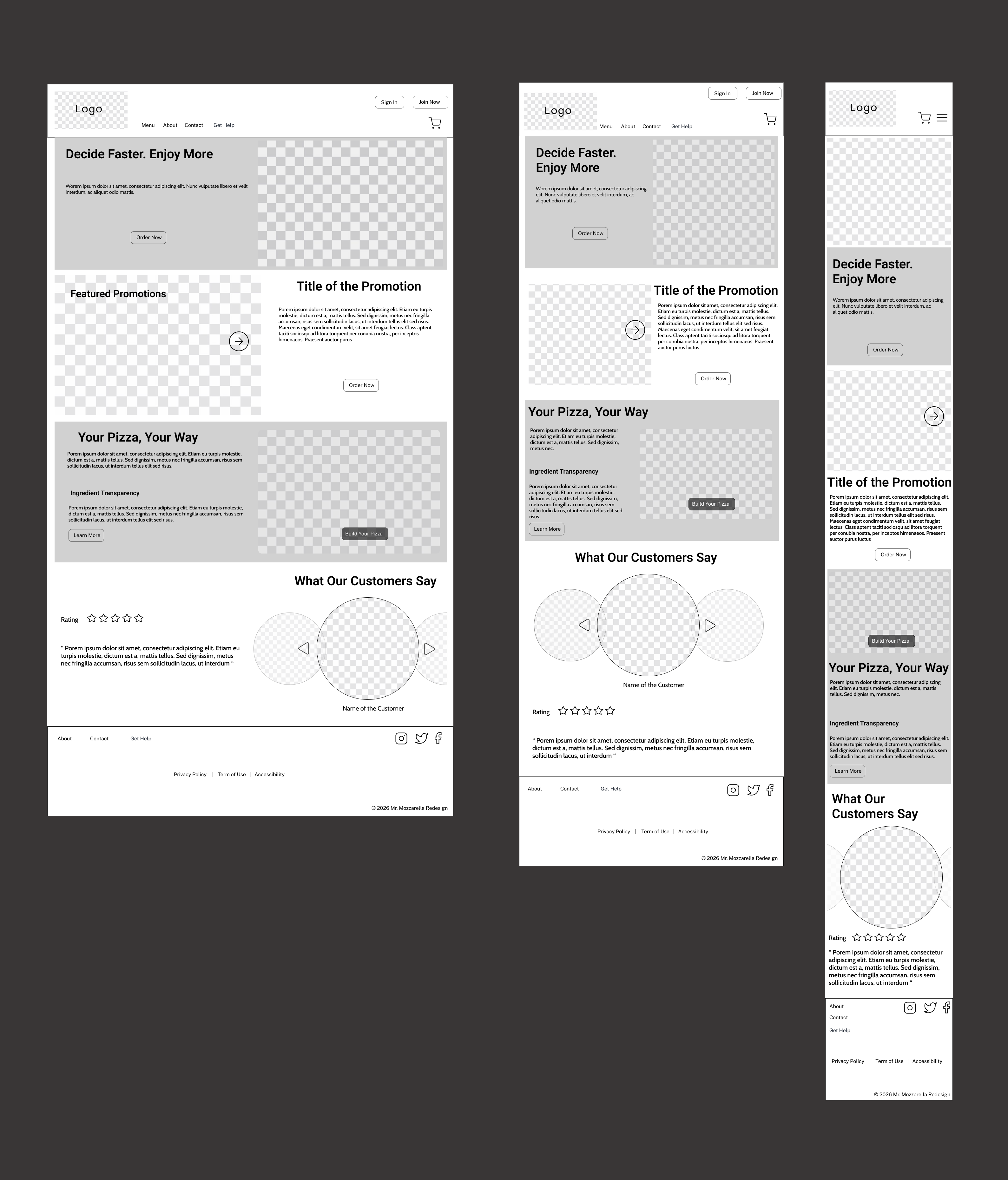
The following wireframes present a focused view of the homepage in low-fidelity. Additional screens and detailed interaction flows were developed as part of the full project but are not included here for brevity.
Key phases included:
Each phase included defined milestones and deliverables, with regular reviews conducted to ensure progress and quality.
The project was executed within a team environment, emphasizing collaboration and shared responsibility.
Team processes included:
Each team member contributed to both individual tasks and collective outcomes, ensuring a cohesive final product.
Industry terminology and processes were consistently used to align the project with professional standards.
The project included estimation and allocation of effort across different phases of development.
The workload was distributed across:
This ensured efficient use of time while maintaining quality across deliverables.
This is your chance to make a significant change in your life.


.png)

